The Five-Year Retirement Gamble: Why Drawing Your ISA at 55 Could Leave You £34,000 Worse Off Than Waiting Until 60
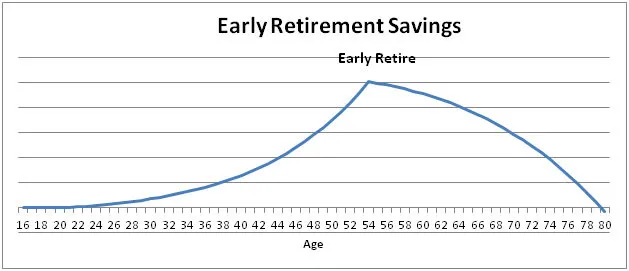
Photo: early retirement planning ISA savings withdrawal UK, via retireby40.org
The appeal of financial independence at 55 is not difficult to understand. Two decades of diligent ISA contributions, a disciplined savings rate, and the tax-free growth that a Stocks and Shares ISA provides — it is, on paper, a credible plan. The FIRE (Financial Independence, Retire Early) community in the UK has grown substantially, and for many younger investors, the ISA is the centrepiece of that strategy.
But there is a risk embedded in early ISA withdrawal that almost nobody in the FIRE conversation addresses with sufficient rigour: sequence-of-returns risk. And in the current market environment of 2026, with elevated valuations, persistent inflation, and genuine uncertainty about near-term equity returns, it has never been more relevant.
The core finding: a UK investor withdrawing from their ISA at 55 rather than 60, under realistic market return assumptions, could permanently forfeit more than £34,000 in total lifetime income. Here is the modelling that explains why.
What Sequence-of-Returns Risk Actually Means
Most people understand that investment returns vary year to year. What is less well understood is that the order in which those returns occur matters enormously once you begin withdrawing from a portfolio — and it matters in a way that has no symmetrical counterpart during the accumulation phase.
During accumulation, a bad year followed by a good year produces the same end result as a good year followed by a bad year. The pound-cost averaging effect means volatility can actually work in your favour when you are buying units regularly.
During decumulation — the withdrawal phase — this symmetry collapses entirely. A severe market fall in the first two or three years of retirement forces you to sell units at depressed prices to meet living expenses. Those units are gone. They cannot participate in the subsequent recovery. Your portfolio is permanently impaired in a way that a later-in-retirement fall, when your portfolio is smaller and you have fewer years of withdrawal ahead, simply is not.
This is sequence-of-returns risk. It is the single largest threat to a sustainable early retirement, and it is almost entirely invisible during the accumulation phase when everything appears to be going well.
The £34,000 Model: 55 Versus 60
To quantify the cost of a five-year early withdrawal decision, consider the following scenario, constructed using assumptions consistent with UK historical equity market data and current gilt yields.
The investor: A 55-year-old UK resident with a Stocks and Shares ISA valued at £400,000, invested in a broadly diversified global equity index fund. They plan to withdraw £18,000 per year (£1,500 per month) to supplement modest part-time income.
Scenario A — Withdraw at 55: The investor begins withdrawals immediately. In the first two years of retirement, markets fall 20% (consistent with the kind of drawdown seen in 2022 and historically not uncommon over any given five-year window). The portfolio falls to approximately £284,000 after withdrawals and losses in year one, and continues to be drawn down during the recovery.
Scenario B — Wait until 60: The same investor keeps their ISA fully invested for five additional years, during which the portfolio grows at a conservative 5% per annum net of charges (below the long-run UK equity average). The portfolio reaches approximately £510,000 before the first withdrawal is made. The same 20% market fall in the first two years of retirement now strikes a larger base, and — critically — the investor has five fewer years of total retirement to fund.
Using a standard portfolio longevity calculator calibrated to UK life expectancy data (Office for National Statistics 2025 actuarial tables), Scenario A exhausts the portfolio at age 83 under the stated assumptions. Scenario B sustains income to age 91 under identical return assumptions.
 Photo: Office for National Statistics, via upload.wikimedia.org
The cumulative difference in total lifetime ISA income received: £34,200, assuming the investor lives to 87 — the current median life expectancy for a 55-year-old UK male, and somewhat higher for females.
For female investors, who statistically live longer and therefore face more years of withdrawal, the gap widens further.
The Specific Danger of 2026's Market Conditions
Sequence-of-returns risk is always present, but it is not always equally acute. In environments where equity valuations are elevated — as they are in early 2026, with US large-cap price-to-earnings ratios sitting well above their long-run averages — the probability of a significant early-retirement drawdown is higher than it would be following a prolonged bear market when valuations have already compressed.
An investor retiring into a market that subsequently falls 30% in year one faces a categorically different outcome from one who retires into a market that subsequently rises 15%. The expected long-run average return is the same. The sequence is not.
For UK investors specifically, the additional complication is sterling volatility. A globally diversified ISA portfolio with significant US equity exposure will see its GBP-denominated value fluctuate with the pound-dollar exchange rate — a factor that sits entirely outside equity market returns and can compound losses in the early withdrawal years.
A Practical Framework for Deciding When Your ISA Is Ready
Rather than relying on a target portfolio number alone, UK investors planning early ISA retirement should apply a multi-factor readiness test.
Factor one — The 25x rule, adjusted for UK conditions. The conventional FIRE rule of thumb suggests accumulating 25 times your annual expenditure before retiring. For UK investors, this calculation should exclude State Pension income from your expenditure figure only from the age at which you will actually receive it (currently 67 for most people under 55 today). Before that age, your ISA must cover the full amount.
Factor two — The cash buffer. Before making the first withdrawal, hold at least two to three years of planned annual expenditure in cash or short-duration gilts, completely separate from your equity ISA. This buffer means you can avoid selling equity units during a market downturn in the critical early years. Cash ISAs and easy-access savings accounts currently paying 4.5–4.8% (as of Q1 2026) make this buffer genuinely productive rather than merely protective.
Factor three — The valuation check. If the CAPE (cyclically adjusted price-to-earnings) ratio for global equities is above its long-run average at the point of your planned retirement — as it is in 2026 — consider working one additional year or reducing your initial withdrawal rate by 0.5%. This is not market timing; it is prudent risk adjustment.
Factor four — State Pension bridge calculation. UK investors who retire at 55 face a 12-year gap before State Pension eligibility. That gap must be funded entirely from private resources. The full new State Pension in 2026 is worth approximately £11,500 per year. When it arrives, it meaningfully reduces the annual draw on your ISA. Modelling your withdrawal rate after State Pension eligibility separately from the pre-67 period produces a materially more accurate picture of sustainability.
What Platforms Allow and What They Do Not
A Stocks and Shares ISA can be drawn down at any age — there is no minimum withdrawal age, unlike a pension (which currently requires you to be 57 from 2028). This flexibility is precisely what makes the ISA the instrument of choice for FIRE-oriented UK investors. But flexibility is not the same as safety.
Hargreaves Lansdown, AJ Bell, and Interactive Investor all offer portfolio drawdown planning tools that allow investors to model withdrawal scenarios. Interactive Investor's 'ii Regular Income' feature and Hargreaves Lansdown's 'Portfolio Analysis' section both provide sustainability projections. These are worth using before making any withdrawal decision.
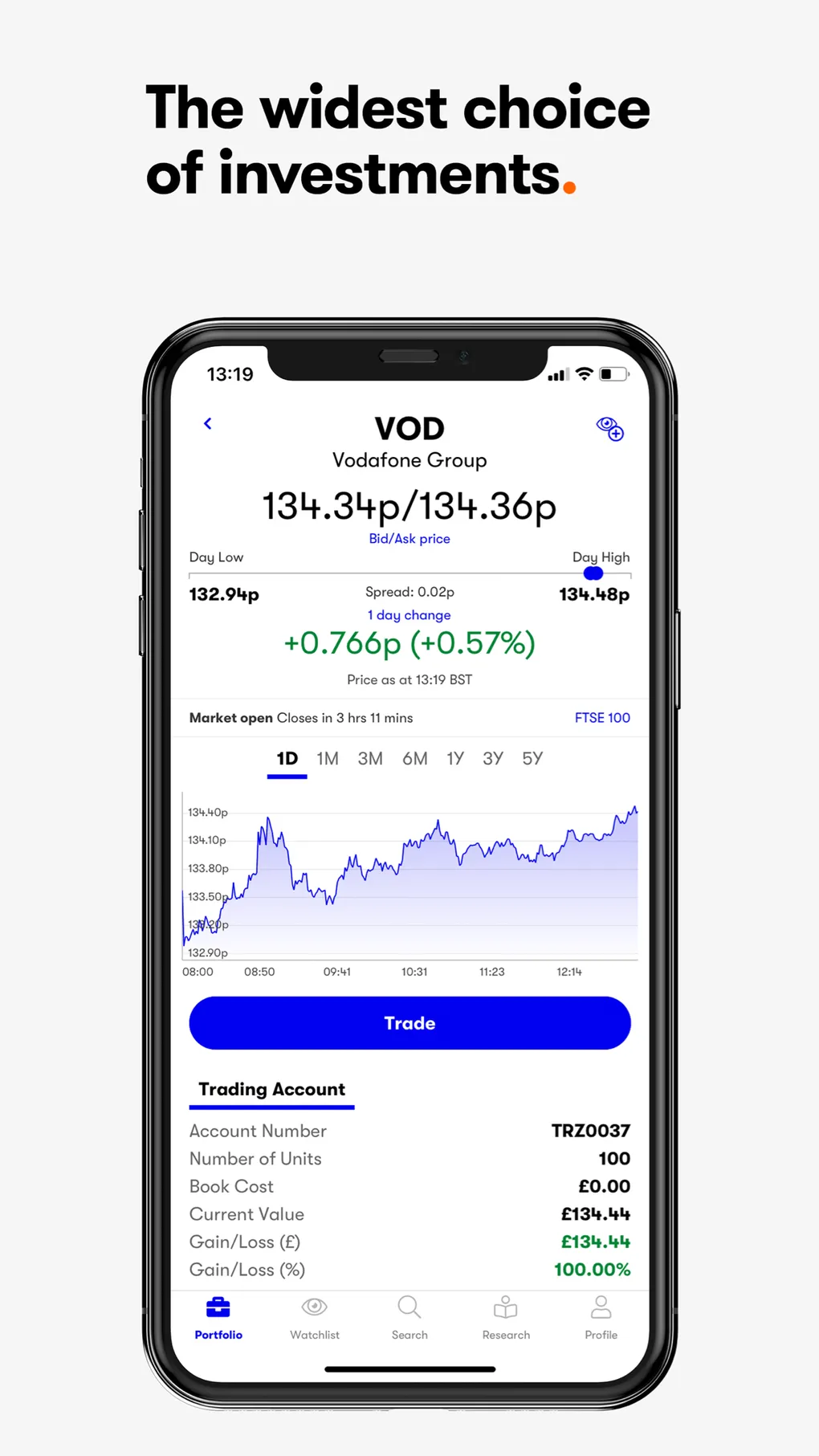 Photo: Interactive Investor, via images.sftcdn.net
 Photo: Hargreaves Lansdown, via rankia.co.uk
The Verdict
Five years of continued investment is not a delay — it is, in most realistic market scenarios, the difference between an ISA that lasts a lifetime and one that does not.
This article is for informational purposes only and does not constitute financial advice. Your capital is at risk. Past performance is not a reliable indicator of future results.