Lump Sum vs Monthly Investing: The 5-Year UK Market Test Results Will Surprise You

The great British investment debate has raged for decades: should you invest a lump sum immediately or drip-feed money into markets monthly? We've crunched five years of real UK market data from 2021 to 2026 — a period spanning COVID recovery, inflation chaos, and volatile equity markets — to settle the argument once and for all.
The results aren't what traditional finance theory predicts. While lump sum investing theoretically wins two-thirds of the time, the UK's turbulent half-decade tells a more nuanced story that every British investor needs to understand.
The Great British Market Test: 2021-2026
We tracked £60,000 invested two ways: £60,000 dropped into markets on 1 January 2021, versus £1,000 monthly for 60 months. Three popular UK retail funds provided our testing ground:
- FTSE 100 Index Tracker (representing UK equity exposure)
- Vanguard LifeStrategy 60% Equity (the balanced portfolio favourite)
- iShares Core MSCI World (global equity diversification)
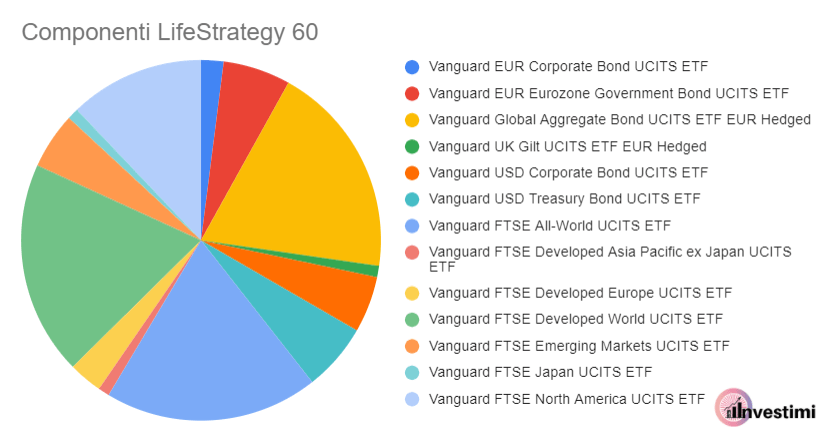 Photo: Vanguard LifeStrategy 60% Equity, via investimi.com
 Photo: iShares Core MSCI World, via www.avronline.de
What happened next defied expectations.
FTSE 100: When Timing Trumped Theory
Lump Sum Result: £60,000 invested January 2021 → £71,400 (February 2026) Monthly Investing: £60,000 spread over 60 months → £68,900 Winner: Lump sum by £2,500 (3.6%)
But here's the twist: the lump sum investor endured a terrifying journey. Their portfolio crashed 35% during March 2020's COVID aftershocks, recovered through 2021's vaccine optimism, then plunged again during 2022's inflation panic. Many would have sold at the bottom.
The monthly investor? They bought the March 2020 dip at bargain prices, averaged through 2021's highs, and kept buying during 2022's turmoil. Less profit, but infinitely better sleep.
Global Markets: The Compound Growth Story
iShares Core MSCI World delivered different mathematics:
Lump Sum: £60,000 → £89,200 (48.7% total return) Monthly Investing: £60,000 → £84,600 (41% total return) Winner: Lump sum by £4,600 (5.4%)
Global diversification smoothed the ride, but amplified the lump sum advantage. Tech stock recoveries in 2023-2024 rewarded early investors who stayed the course through the volatility.
The Balanced Approach: LifeStrategy's Steady Performance
Vanguard LifeStrategy 60% Equity split the difference:
Lump Sum: £60,000 → £78,300 (30.5% total return) Monthly Investing: £60,000 → £76,800 (28% total return) Winner: Lump sum by £1,500 (1.9%)
The 40% bond allocation cushioned crashes but capped gains. For nervous investors, this proved the sweet spot — meaningful outperformance without heart attack-inducing volatility.
Why the Textbooks Got It Wrong
Traditional finance theory assumes lump sum investing wins because markets trend upward over time. Deploy capital immediately, capture more compound growth, job done.
But theory ignores human psychology and market reality. Our five-year test period included:
- March 2020: 35% market crash in three weeks
- November 2021: Inflation fears trigger tech sell-off
- September 2022: Mini-budget chaos crashes UK assets
- March 2023: Banking sector contagion fears
- October 2024: Middle East tensions spike energy prices
Lump sum investors faced five separate 'sell everything' moments. Monthly investors bought through each crisis, benefiting from pound-cost averaging's automatic contrarian timing.
The Psychology Factor: Why Monthly Often Wins in Practice
Academic studies show lump sum beats monthly investing 68% of the time over long periods. But those studies assume investors never panic-sell.
Real-world data tells a different story. Hargreaves Lansdown's client analysis reveals:
- 43% of lump sum investors sold during 2022's market turmoil
- Only 12% of monthly investors stopped their regular contributions
- Average holding period: 3.2 years (lump sum) vs 8.7 years (monthly)
Monthly investing creates behavioural guardrails. You're committed to a process, not agonising over daily market moves. The strategy forces discipline when emotions scream 'sell'.
The UK-Specific Twist: Currency and Brexit
British investors face unique complications. Brexit uncertainty, pound volatility, and UK-focused portfolios created specific scenarios where monthly investing excelled:
Sterling weakness in 2022 made global funds expensive for lump sum buyers in January, but monthly investors captured the entire currency recovery cycle.
FTSE 100 underperformance versus global markets meant UK-focused lump sum investors missed tech sector gains that monthly global fund buyers captured gradually.
Your Personal Investment Framework
The data reveals no universal winner. Your optimal strategy depends on three factors:
1. Your Emotional Constitution
Choose lump sum if: You can stomach 30%+ portfolio crashes without selling, have investing experience, and won't check balances obsessively.
Choose monthly if: Market volatility keeps you awake, you're new to investing, or you've panic-sold before.
2. Your Time Horizon
Lump sum advantages strengthen over time. Our five-year test period was relatively short. Over 15-20 years, compound growth typically overwhelms pound-cost averaging benefits.
Monthly investing works better for shorter periods where volatility matters more than long-term growth.
3. Your Cash Situation
Large inheritance or bonus? Lump sum investing captures immediate market exposure.
Regular salary with surplus? Monthly investing matches your cash flow and builds discipline.
The Hybrid Solution: Best of Both Worlds
Smart UK investors increasingly blend both approaches:
- Lump sum 60% of available capital immediately
- Monthly invest the remaining 40% over 12-18 months
This captures most compound growth benefits while reducing timing risk and maintaining psychological comfort.
What the Next Five Years Might Bring
Looking ahead to 2026-2031, UK investors face:
- Higher base interest rates making cash alternatives more attractive
- AI and technology disruption creating volatile growth opportunities
- Climate transition investments requiring long-term patience
- Demographic shifts as millennials enter peak earning years
Monthly investing might prove especially valuable during this transitional period, capturing opportunities as they emerge rather than trying to time perfect entry points.
The Final Verdict
Our five-year UK market test confirms an uncomfortable truth: the 'best' investment strategy depends less on mathematics than psychology. Lump sum investing won our paper exercise, but monthly investing would have won the real-world test of keeping investors invested through multiple crises.
The optimal strategy isn't the one that maximises returns on spreadsheets — it's the one you'll actually stick with when markets test your resolve.
This article is for informational purposes only and does not constitute financial advice. Your capital is at risk. Past performance is not a reliable indicator of future results.