
The Seductive Appeal of Guaranteed Returns
Across Britain, fixed-rate Cash ISAs are experiencing their biggest surge in popularity since 2008. With headline rates reaching 3.8% on three-year terms — compared to 2.9% on easy-access alternatives — thousands of UK savers are locking away their ISA allowance for guaranteed returns.
But the mathematics of early exit penalties, interest rate trajectory forecasts, and opportunity cost against other asset classes reveals a more complex picture. In many scenarios, today's "best" fixed rates could become tomorrow's wealth destroyers.
The Hidden Cost Structure That Changes Everything
Fixed-rate Cash ISAs come with penalty structures that providers rarely emphasise in their marketing. Here's what the UK's top five fixed-rate ISA providers actually charge when life gets in the way:
Santander 3-Year Fixed ISA (3.75%)
- Early exit penalty: 365 days of interest
- Effective rate if withdrawn after 18 months: -2.1%
Nationwide 2-Year Fixed ISA (3.6%)
- Early exit penalty: 180 days of interest
- Effective rate if withdrawn after 12 months: 1.8%
First Direct 3-Year Fixed ISA (3.8%)
- Early exit penalty: 365 days of interest
- No partial withdrawals permitted
Virgin Money 18-Month Fixed ISA (3.4%)
- Early exit penalty: 120 days of interest
- Minimum withdrawal: entire balance
Aldermore 5-Year Fixed ISA (4.1%)
- Early exit penalty: 365 days of interest
- Effective rate if withdrawn after 2 years: 0.3%
These penalties create a breakeven point that many savers don't calculate before committing their money.
The Interest Rate Trajectory Problem
Fixed-rate ISAs made sense when Bank of England base rates were heading downward. But current economic indicators suggest a different path ahead:
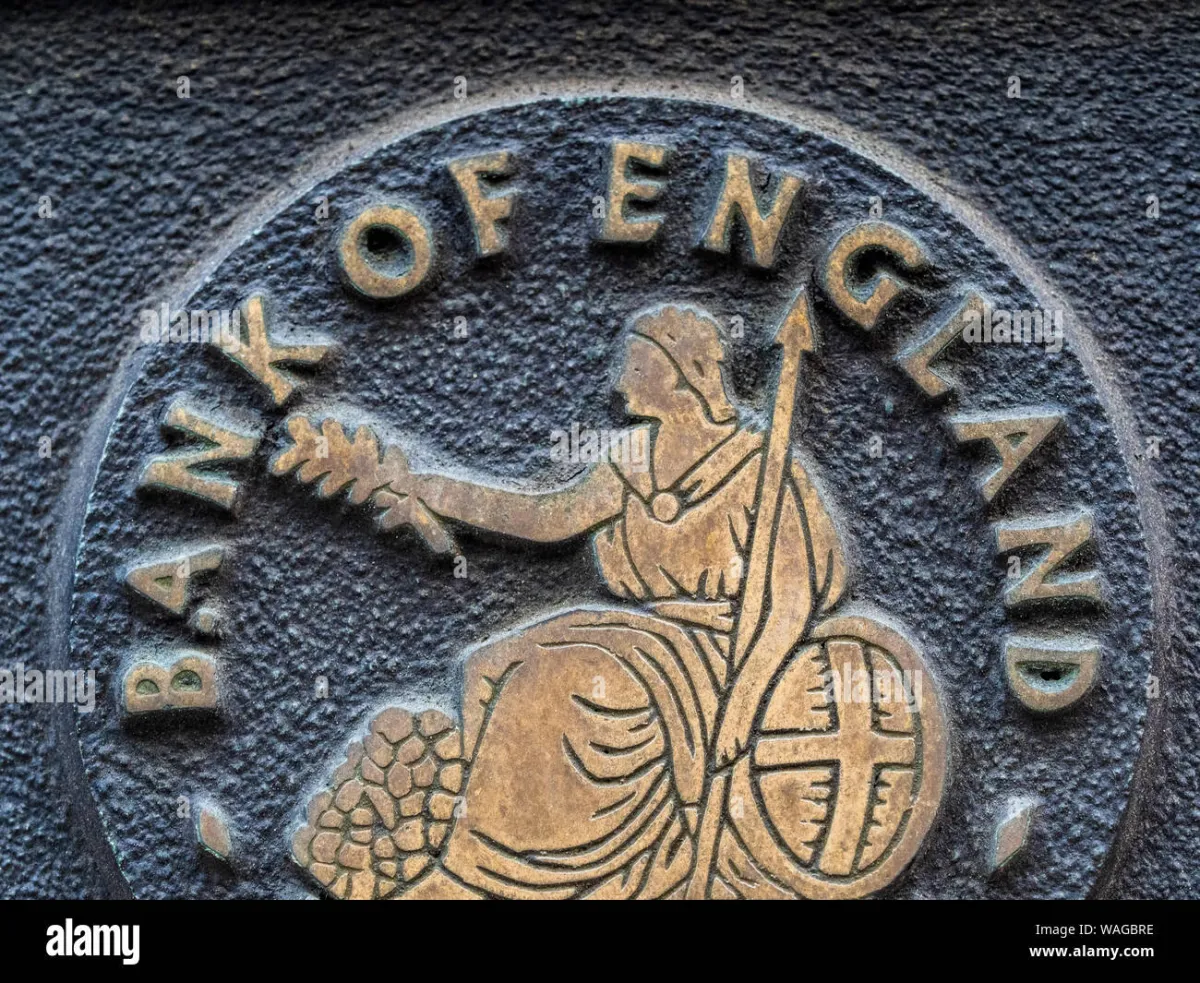 Photo: Bank of England, via c8.alamy.com
Inflation Persistence: Core inflation remains above the Bank of England's 2% target, creating pressure for sustained higher rates.
Global Rate Environment: The Federal Reserve and European Central Bank are maintaining restrictive monetary policy, limiting the Bank of England's room to cut rates aggressively.
 Photo: Federal Reserve, via www.federalreserve.gov
Economic Growth: UK GDP growth forecasts suggest an economy that can withstand higher rates for longer than previously expected.
This means savers locking in today's 3.8% rate for three years could miss out on easy-access rates of 4.5% or higher within 12-18 months.
The Opportunity Cost Against Other Asset Classes
The most significant hidden cost of fixed-rate Cash ISAs is the opportunity foregone by not investing in other asset classes during the lock-in period.
Historical Context: Over any three-year period since 1990, UK equity markets have outperformed cash in 78% of cases, with an average outperformance of 4.2% annually.
Current Valuations: The FTSE 100 trades at historically modest valuations compared to international markets, suggesting potential for above-average returns over the next 2-3 years.
Dividend Yields: Many FTSE 100 companies currently offer dividend yields above 4%, providing income that can grow over time, unlike fixed cash rates.
When Fixed Rates Actually Make Sense
Despite these drawbacks, fixed-rate Cash ISAs do have their place in certain circumstances:
Short-Term Certainty Needs: If you know you'll need the money for a house deposit or major purchase within 2-3 years, the guaranteed return eliminates sequence-of-returns risk.
Portfolio Diversification: As part of a broader investment strategy, fixed-rate cash can provide stability to balance higher-risk equity holdings.
Psychological Comfort: For savers who would otherwise keep money in 0.1% current accounts due to investment anxiety, even a suboptimal fixed rate represents progress.
Age and Risk Capacity: Investors within 5 years of retirement may prioritise capital preservation over growth potential.
The Flexibility Premium Calculation
To quantify the value of flexibility, consider this scenario:
Option A: £20,000 in a 3-year fixed ISA at 3.8% Option B: £20,000 in easy-access ISA at 2.9%, with ability to switch
If easy-access rates rise to 4.5% after 18 months (a realistic scenario given current economic trends), Option B delivers:
- First 18 months: £20,000 × 2.9% × 1.5 = £870
- Next 18 months: £20,870 × 4.5% × 1.5 = £1,409
- Total return: £2,279
Option A delivers: £20,000 × 3.8% × 3 = £2,280
The fixed rate wins by just £1 — essentially no advantage for giving up three years of flexibility.
Platform-Specific Considerations
Different UK investment platforms handle Cash ISA flexibility differently:
Marcus by Goldman Sachs: Easy-access ISA at 2.85%, with instant online rate changes when market conditions shift
Chip: App-based platform offering automatic rate switching between easy-access providers to maintain competitive returns
Monzo: Integrated easy-access ISA at 2.9% with instant access via mobile app, no penalties or restrictions
Traditional Banks: Often offer lower easy-access rates but provide branch access and telephone support for larger balances
The Tax Year Timing Factor
With the 2025-26 ISA deadline approaching on 5 April, timing becomes crucial:
Late Subscription Risk: Opening a fixed-rate ISA in March means you can't access the new £20,000 allowance in April if you need to break the fixed term early.
Rate Reset Opportunity: Waiting until the new tax year allows you to assess interest rate trends over the next few weeks before committing to a fixed term.
Cash Flow Management: Consider whether you'll have sufficient liquid savings outside your ISA to handle emergencies without needing early access.
The Inflation-Adjusted Reality Check
Even the best fixed-rate Cash ISAs currently offer negative real returns when adjusted for inflation:
- 3.8% fixed rate minus 3.2% current inflation = 0.6% real return
- Historical UK inflation average: 2.8%
- Required nominal rate for 2% real return: 5.8%
This means fixed-rate savers are essentially paying for the privilege of preserving purchasing power, rather than building real wealth.
Alternative Strategies for Risk-Averse Savers
For investors seeking stability without the inflexibility of fixed rates:
Government Bond ETFs: Offer similar stability to cash with potential for capital appreciation when rates fall
Premium Bonds: NS&I Premium Bonds offer tax-free returns with £1 million maximum investment and instant access
Short-Term Corporate Bond Funds: Higher yields than cash with relatively low volatility and daily liquidity
Laddered Fixed-Term Deposits: Spread money across multiple shorter fixed terms to maintain some liquidity while capturing fixed rates
The Bottom Line: Fixed-rate Cash ISAs offer the comfort of certainty but often deliver the reality of missed opportunities — in today's environment, flexibility commands a premium that most savers undervalue until it's too late.
This article is for informational purposes only and does not constitute financial advice. Your capital is at risk. Past performance is not a reliable indicator of future results.